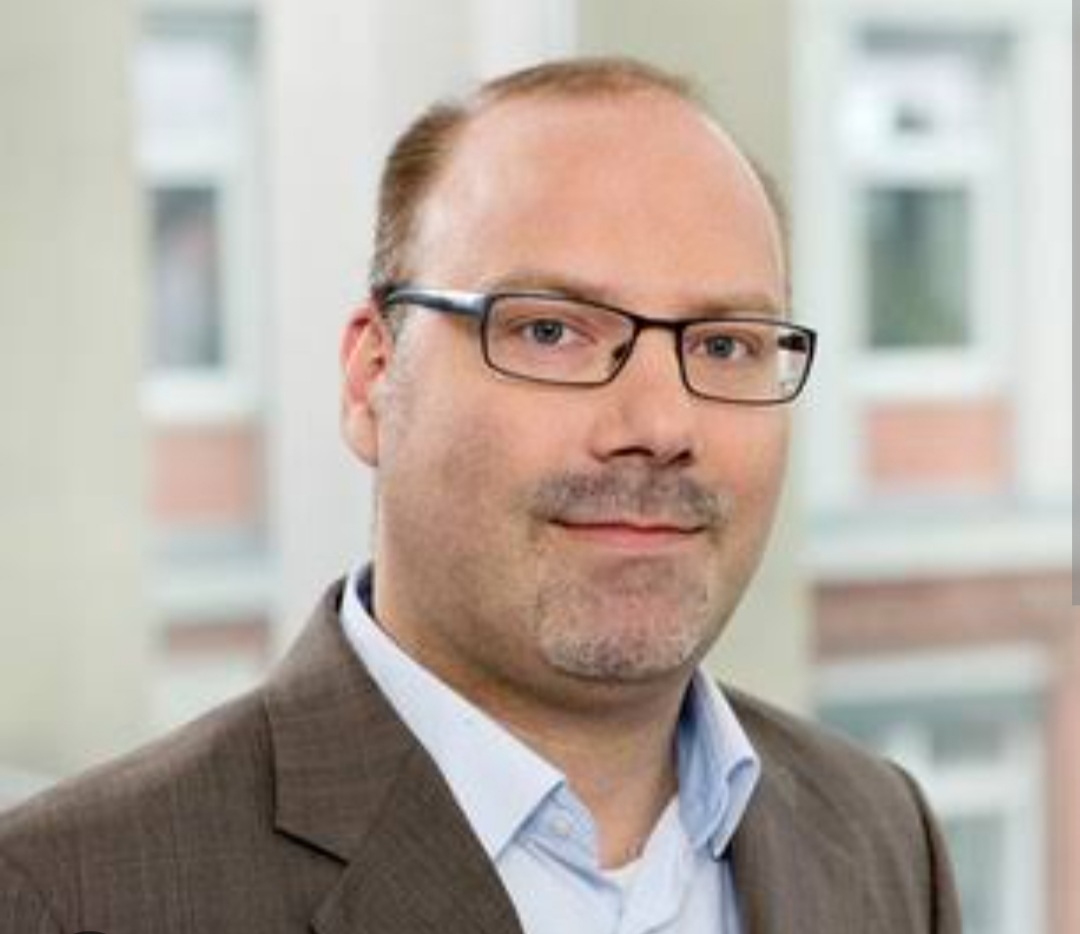
 Dr. Dipl.-Ing. Wolfram Schmidt
Bundesanstalt fur Materialforschung und -prufung (BAM), Germany
Wolfram Schmidt obtained a Dipl.-Ing. degree from RWTH Aachen and a PhD from the Technical University of Eindhoven. He has been working at the Federal Institute for Materials Research and Testing since 2005, where he is responsible for the laboratory for concrete rheology and chemical concrete admixtures. He is secretary of the German Rheological Society, a member of fib and RILEM officer. He is the initiator of various educational and scientific networking programmes, among others ISEE-Africa (Innovation Science, Engineering, Education), the ACCTA conference series (Advances in Cement and Concrete Technologies in Africa), and the pan-African interlaboratory proficiency testing scheme PACE-PTS.
In 2018 he was awarded the German-African Innovation Incentive Award for research on the conversion of bio-based wastes to high-tech concrete constituents He is also involved in a variety of activities related to sustainable construction, one of which has been the GLOBE Global Consensus on Sustainability in the Built Environment.
TITLE:
Sustainable without borders - how Africa can escape established rules to make concrete solutions more local, climate-friendly, and sustainable than in the rest of the world.
SUMMARY:
Construction for urbanisation and infrastructure in sub-Saharan Africa (SSA) requires vast amounts of materials. Concrete remains the most viable solution, due to its scalability and low impact on carbon emissions and loss of biodiversity. For greener construction solutions, SSA has a better offset position than the rest of the world, due to the lack of historic technology boundaries and a marginal per capita carbon footprint.
However, economic constraints, lacking regulations and informality are hindrance to the implementation of sustainable solutions. Therefore, Africa must catch up fast with global construction standards without perceiving them as limit. Beyond standards, locally developed, regionally sourced leapfrogging innovation is required for Africa to pioneer low carbon construction.
The presentation highlights drawbacks of currently applied international regulations without relevance for Africa. Then, possible circular African solutions based on renewable resources are presented, which comprise organic and mineral concrete constituents and novel, digitalised approaches unique to Africa.
Finally, their implementation is discussed in context of the high level of informality. The discussion shows that challenges exist but also underpin the tremendous potentials that lie within the continent to revolutionise construction technologies worldwide by thinking out of the established regulative box and customising solutions to the local framework.
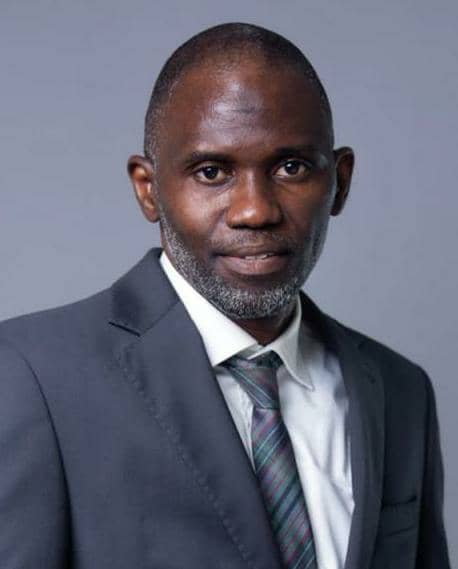 Engr Femi Yusuff
Project Director, Lafeza Consultants Nigeria Ltd
Femi Yusuff is a Civil/Structural Engineer, Project Manager, Business Manager, and Construction materials development expert with several years of work experience. He has gained substantial work experience by working for multinational companies with a focus on Structural Engineering, Building Construction Materials, and Business Development. Femi has a strong and diverse academic background. He gained a Master of Business Administration (MBA) from the University of South Wales, a Master of Science (MSc) in Construction Project Management, from London South Bank University, and a Bachelor of Engineering degree from the Federal University of Technology, Minna, Niger State, Nigeria.
He has gained senior management qualifications by attending the Senior Management Program (SMP 83) of the Lagos Business School and the Emerging Leaders Program of the Ivey Academy, Canada. Femi is a founding member of the Society of Cement and Concrete Researchers in Nigeria (SCCRIN) and several global professional bodies such as the Project Management Institute (PMI), U.S.A, the Institution of Civil Engineers, U.K, and the Engineering Council, U.K. In Nigeria he is registered with the Nigerian Society of Engineers, (NSE), he is a fellow Nigerian Institution of Structural Engineers (FNIStructE), and registered with the Council for the Regulation of Engineering in Nigeria (COREN).
He has presented several Technical Papers at the Annual General Meeting (AGM) of the Nigerian Institution of Structural Engineers (NIStructE), The Nigerian Society of Engineers (NSE) and Lafarge Africa Plc thought leadership series on the development of Housing in Nigeria. Some of the Industry awards that he has received include the "Top Executives in Architecture, Construction and Real Estate Industry" (2015), Contribution to Knowledge and Engineering Practice in Nigeria (2021 & 2023) by the Nigerian Institution of Structural Engineers.
TITLE:
3D Printing for Building Structures: Research and Development Advances in Nigeria
SUMMARY:
The construction industry in Nigeria plays a crucial role in the country's infrastructure development, catering to various sectors such as residential, commercial, and industrial. Nigeria's building construction background encompasses a diverse range of architectural styles, materials and construction techniques influenced by cultural, economic and environmental factors. Despite advancement in construction practices, Nigeria continues to face challenges with building collapses leading to loss of life, property damage and economic setbacks. Factors contributing to building collapses include inadequate structural design, poor construction quality, lack of enforcement of building codes and regulations and substandard materials.
3D Printing technology has the potential to solve some of the key challenges in the building construction segment. This paper presents the progress that has been achieved in the development of the technology in Nigeria. The paper will discuss collaborative efforts between academia, industry and research institutions to develop 3D printing technology for Building structures in Nigeria. In particular the paper will highlight progress updates on potential research opportunities with Loughborough University (U.K), business partnership with Cipriani Nig Ltd, 3D printing machine manufacturing capabilities of 14 Trees Ltd (Kenya) and the design and construction supervision capabilities of Lafeza Consultants Ltd.
The paper will present calculations and analysis of the stresses being experience by a typical 3D Printed wall to assess its structural integrity, safety and code compliance with Eurocode 6 (Design of Masonry Structures) and Eurocode 2 (Design of Concrete Structures). A proposed construction sequence for the technology will also be discussed to highlight a phased approach to assembly and integration of 3D printed components. The paper will be concluded by summarizing the progress achieved to date and the level of maturity that has been achieved for 3D Printing technology to be implemented in Nigeria Building Construction Industry.
 Engr. Nimot Muili
Ove Arup & Partners Nigeria Ltd
Nimot Muili is the Climate & Sustainability
Portfolio (CSSP) Manager, based in the ARUP, Lagos Nigeria Office. She
plays strategic role in the firm's planning & advisory and enabling
infrastructure services.
Her background is
civil & environmental engineering and project management, with
extensive work experience in design and delivery of projects related to
cities development / urban renewal, renewable energy and advisory
services to improve city resilience.
Nimot
Muili led multi-disciplinary teams and works with different parts of the
Arup world on multi sector projects to design and develop pragmatic
sustainable, and cost-efficient solutions to improve cities, vulnerable
and micro areas.
TITLE:
SUMMARY:
